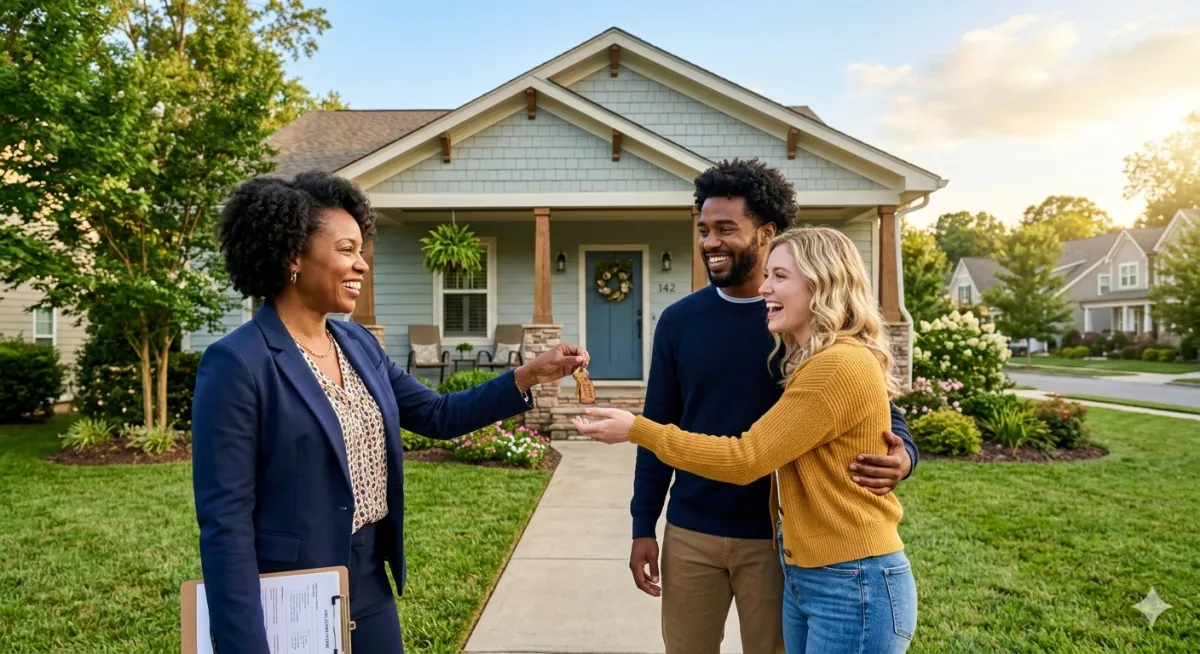
How to Buy Your First Home in North Carolina: Grants, Mortgage Tips & Affordability Breakdown
Dreaming of owning a home in North Carolina but not sure where to begin? You’re not alone. For many first-time buyers, the process of navigating mortgage options, down payments, and closing costs can feel overwhelming — especially in a market that keeps changing. The good news? North Carolina is one of the best states in the country for first-time buyers, with generous grant programs, competitive mortgage rates, and a range of affordable cities to choose from. As a trusted Durham NC realtor and Raleigh NC realtor serving buyers across the Triangle, I’ve put together this complete north carolina real estate guide to walk you through everything — from how much you can realistically afford, to the grants and programs that could put thousands of dollars back in your pocket, to a clear step-by-step path from pre-approval to closing day. Let’s get you home.
Is North Carolina a Good State for First-Time Buyers in 2026?
Before diving into numbers and programs, it helps to understand what kind of market you’re entering. North Carolina’s housing landscape in 2026 offers something rare: opportunity with affordability. For a deeper look at how the market is shifting month to month, check out this North Carolina real estate market update for the latest data and trends.
NC Housing Market Snapshot for First-Time Buyers in 2026
The North Carolina housing market in 2026 is showing signs of balance that actually favor buyers. Inventory across the state has climbed around 11% year-over-year, giving buyers more options and stronger negotiating power than they’ve had in several years. Homes are sitting on the market for an average of 77 days, meaning you no longer need to make panic decisions over a single weekend.
The statewide median home price sits at approximately $375,100 — still significantly below many comparable states and well under the national average in major metro areas. The average 30-year fixed mortgage rate in North Carolina is around 6.54%, sitting just below the national average. That combination of moderate prices, rising inventory, and a slight rate advantage makes this one of the more accessible entry points for first-time buyers the state has seen in recent years.
Perhaps most importantly, North Carolina is one of only a handful of states where the housing finance agency actively stacks grant programs on top of conventional and government-backed loans — meaning your real buying power is often higher than your pre-approval letter suggests. According to the NC Housing Finance Agency, thousands of North Carolina buyers use these programs every year, and many don’t discover them until they’re already working with a knowledgeable agent.
Top Affordable Cities in NC: From Rocky Mount to Greenville
Not all of North Carolina carries the same price tag. While cities like Raleigh (median home price: ~$420,000) and Charlotte are more competitive, the state is full of affordable entry points that offer real quality of life.
Here are some of the most budget-friendly markets to consider:
•Rocky Mount — The most affordable large city in NC, with a median home price of $175,000 and monthly mortgage estimates around $1,100. A mid-sized city of 54,000 with parks, arts, and dining along the Tar River.
•Fayetteville — Median home price of $223,750, with estimated monthly payments starting around $968. Home to Fort Liberty and strong VA loan activity, making it ideal for military buyers.
•Roanoke Rapids — One of the most affordable markets in the entire state, with home prices under $120,000 and estimated monthly payments as low as $884.
•Greenville — Home to East Carolina University, a vibrant college-town atmosphere, and a median home price around $255,000 — about 32% below the statewide median.
•Henderson — Located an hour north of Raleigh with home prices averaging around $1,342/month in mortgage payments. The entire town is geographically eligible for zero-down USDA loans, which is a significant advantage for qualifying buyers.
•Durham — A thriving city with a strong job market anchored by Duke University and Research Triangle Park. Durham offers a range of price points from starter homes under $275,000 to mid-range neighborhoods ideal for first-time buyers looking to build equity in a fast-growing market.
If you’re open to smaller cities, the cost savings can be dramatic — and many of these markets are within comfortable commuting distance of larger employment centers.
How Much Home Can You Actually Afford in North Carolina?

This is the question every first-time homebuyer in NC needs to answer before anything else — and the answer is usually more encouraging than people expect, especially when you factor in NC-specific assistance programs.
Breaking Down the Real Cost — Mortgage, Taxes & Insurance
Affordability isn’t just about the purchase price. Your true monthly housing cost includes your mortgage principal and interest, property taxes, homeowner’s insurance, and potentially private mortgage insurance (PMI) if your down payment is below 20%.
Here’s a realistic breakdown for a typical NC home purchase in 2026:
For a $331,000 home (roughly the statewide average) with 20% down at the current average rate of 6.54%, the estimated monthly mortgage payment is approximately $1,678. Add property taxes (NC’s effective rate is around 0.77%, according to SmartAsset’s North Carolina property tax data) and homeowner’s insurance, and your all-in monthly cost will typically run between $2,000 and $2,400.
In more affordable markets, the math gets much easier. For a $175,000 home in Rocky Mount with 5% down, total monthly housing costs — including taxes and insurance — can fall well under $1,400. In Roanoke Rapids, buyers are reporting all-in monthly costs around $884 on typical homes.
The standard guideline used by lenders and the NC Housing Finance Agency is to keep your total housing payment — including taxes and insurance — at or below 32% of your gross monthly income. Your total monthly debts (housing plus other obligations) should not exceed 45% of gross income.
A simple way to estimate your target price range: take your annual household income, multiply by 2.5 to 3, and that’s a reasonable home price to target. Someone earning $65,000 per year would be well-positioned to buy in the $162,000–$195,000 range without stretching their budget. As an nc first time homebuyer expert serving the Durham and Raleigh areas, I walk every client through this exact calculation in our first conversation — because knowing your real number changes everything.
Calculating Your Budget: How Much House Can You Afford in NC?
Understanding PITI, DTI, and Credit Score Requirements
Getting your numbers clear before you tour a single home saves enormous time and prevents the heartbreak of falling in love with something out of reach. Here are the four things to establish before you begin:
1. Know your credit score. Your score determines the mortgage products available to you and the rate you’ll receive. For conventional loans in NC, most lenders require a minimum of 620. FHA loans accept scores as low as 580. NC Housing Finance Agency programs require a minimum of 640 for most products. If your score needs work, even a few months of paying down balances and avoiding new credit inquiries can meaningfully improve your options. AnnualCreditReport.com is the only federally authorized source for your free credit report.
2. Calculate your debt-to-income (DTI) ratio. Add up all your monthly debt payments (student loans, car payments, credit cards), divide by your gross monthly income, and multiply by 100. Most NC lenders prefer a DTI below 43% for conventional loans. NCHFA programs generally want to see a DTI below 43% as well.
3. Know how much you have for a down payment. In NC, minimum down payments start as low as 3% for conventional loans and 3.5% for FHA loans. With NCHFA assistance programs (covered in the next section), your required cash at closing can drop significantly. Plan also for closing costs, which in NC typically run 2–5% of the purchase price.
4. Get pre-approved — not just pre-qualified. Pre-approval involves a full review of your credit, income, and assets by a lender. It gives you a real number to work with, shows sellers you’re serious, and is essentially required in today’s market. Pre-qualification, by contrast, is just an estimate and carries little weight in competitive situations.
Essential North Carolina First Time Home Buyer Programs and Grants
This is where North Carolina truly stands out. The state’s housing finance agency administers multiple first time homebuyer programs in NC that can dramatically reduce or eliminate the upfront cost of buying a home. Many buyers don’t realize these programs exist — and those who do often don’t know they can be stacked together.
NC Home Advantage Mortgage and the $15,000 Assistance Program
The NC Home Advantage Mortgage, administered by the North Carolina Housing Finance Agency (NCHFA), is the cornerstone program for first-time buyers in the state. It provides a 30-year fixed-rate mortgage (available in conventional, FHA, VA, or USDA formats) with down payment assistance of up to 3% of the loan amount. The assistance is structured as a zero-interest, deferred second mortgage that is forgiven at 20% per year at the end of years 11 through 15 — meaning if you stay in the home, you eventually owe nothing.
To qualify, buyers must: - Purchase a home in North Carolina as their primary residence - Have a minimum credit score of 640 (660 for manufactured homes) - Not exceed the income limit of $140,000 - Meet loan-specific purchase price limits - Occupy the home within 60 days of closing
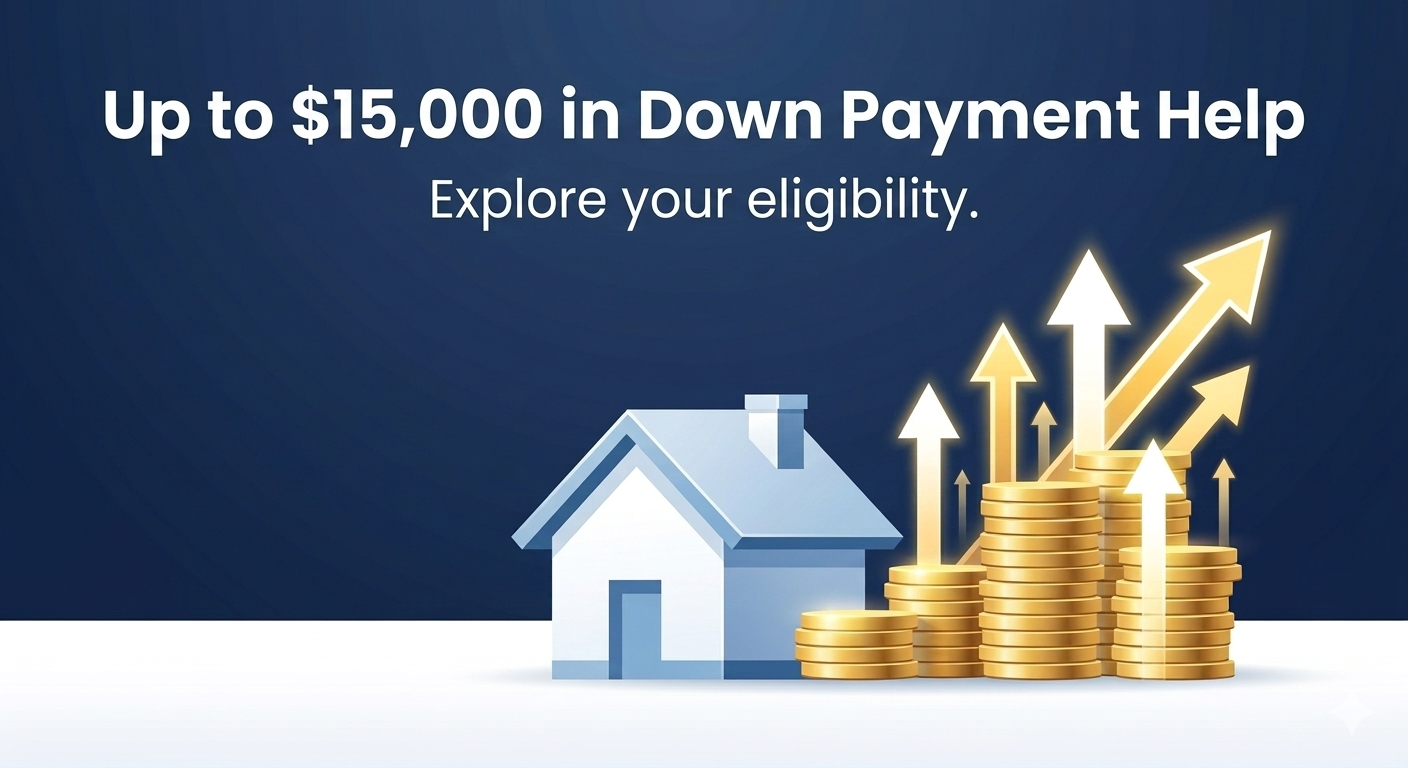
On top of the base program, first-time buyers and military veterans who qualify for the NC Home Advantage Mortgage may also be eligible for the NC 1st Home Advantage Down Payment — an additional $15,000 in down payment assistance, also structured as a 0%, deferred second mortgage with the same forgiveness schedule. This program cannot be combined with the NC Home Advantage Tax Credit, but for buyers who need a larger upfront boost, it’s one of the most powerful tools available in the state.
There is also the NC Home Advantage Tax Credit (Mortgage Credit Certificate), which allows eligible first-time buyers to claim up to $2,000 per year as a federal tax credit — not just a deduction — for the life of the loan. This can save tens of thousands of dollars over the course of a 30-year mortgage.
For lower-income buyers, the Community Partners Loan Pool (CPLP) provides up to 25% of the home’s purchase price (with a maximum of $50,000) in down payment assistance for households earning below 80% of the area median income. Unlike the other programs, CPLP assistance is repaid when you sell the home rather than being forgiven — but it carries no interest and requires no monthly payments.
Local and County-Level Grants (Greensboro, Raleigh, and USDA)
Beyond the statewide NCHFA programs, many North Carolina cities and counties offer their own layered assistance that can be stacked on top of state programs.
City of Greensboro — The Housing Connect Homebuyer Assistance Program provides up to $15,000 to eligible first-time buyers. A separate Enhanced Homebuyer Assistance Program raises that ceiling to $25,000 for buyers who qualify, with a maximum eligible home price of $450,000.
City of Raleigh — The city’s homebuyer assistance program offers zero-interest, deferred loans for down payment and closing costs, with no payments due until the home is sold or is no longer the primary residence. As a Raleigh NC realtor, I work with buyers to identify and apply these programs before their first offer is ever written.
City of Durham — Durham’s Homebuyer Assistance Program provides forgivable loans of up to $80,000 for income-qualified buyers purchasing in Durham. This is one of the most generous city-level programs in the entire state — and one that many Durham NC buyers don’t know exists until they work with a local agent.
FHLBank Atlanta Programs — Federal Home Loan Bank Atlanta offers homebuyer set-aside programs accessible through participating member lenders, targeted at buyers at or below 80% of area median income. As of early 2026, new funding windows have opened — but these are often time-limited and first-come, first-served, so it pays to ask your lender specifically whether they participate.
USDA Rural Development Loans — If you’re buying in a rural or semi-rural area of NC, USDA loans offer 100% financing with no down payment required. Towns like Henderson, Jacksonville, and many smaller communities throughout the state are eligible. This is one of the most underutilized mortgage products for NC first-time buyers.
VA Loans — North Carolina has a significant military population near Fort Liberty (formerly Fort Bragg), Camp Lejeune, and other installations. Veterans and active-duty service members should always explore VA loans first — they require no down payment, no PMI, and typically offer below-market interest rates.
The key takeaway: when you meet with a lender, specifically ask which NCHFA programs, city programs, and federal programs they can access and combine on your behalf. Working with one of the top NC realtors who specializes in first-time buyers means you’ll never leave money on the table — a knowledgeable agent can often help layer multiple programs to dramatically reduce your cash to close.
Step-by-Step Guide: Buying Your First House in North Carolina
Now that you understand the market, your budget, and the programs available to you, here’s the practical path from start to closing. If you’d like personalized guidance at any stage, you can always connect with a trusted NC real estate professional who can walk you through each step based on your specific situation.
From Pre-Approval to Closing — The NC Buyer Process Explained
Step 1: Review your credit and finances. Pull your free credit report at AnnualCreditReport.com, dispute any errors, and spend 60–90 days improving your score if needed. Calculate your DTI ratio and determine your realistic down payment savings.
Step 2: Get pre-approved. Work with an NCHFA-approved lender if you plan to use state programs. Bring your W-2s, two years of tax returns, recent pay stubs, and 60 days of bank statements. A pre-approval letter is essential before making offers in today’s NC market.
Step 3: Complete homebuyer education (if required). Most NCHFA programs require completion of a HUD-approved homebuyer education course. Many are available online through the NCHFA’s approved provider list and take four to eight hours. This is worth doing regardless of whether it’s required — buyers who complete it consistently make better decisions throughout the process.
Step 4: Find a real estate agent. In North Carolina, working with a buyer’s agent is free to you — the seller traditionally pays the commission. Look for trusted NC real estate professionals who specialize in first-time buyers and have deep knowledge of NCHFA programs in your target market. As a Latrice McFadden Durham Raleigh real estate advisor, I work exclusively in the interest of my buyers — helping you navigate neighborhoods, programs, negotiations, and closing with confidence.
Step 5: Search for homes and make an offer. With pre-approval in hand and your agent guiding the search, tour homes within your budget. When you find the right one, your agent will help you write a competitive offer that accounts for current market conditions. In NC, offers include a due diligence fee (typically $2,000–$5,000 in competitive markets) paid directly to the seller — this is non-refundable if you walk away, but is credited toward the purchase price at closing.
Step 6: Schedule inspections and negotiate repairs. After your offer is accepted, you enter the due diligence period — a unique aspect of North Carolina real estate law. Use this time to schedule a professional home inspection. Focus your negotiation requests on safety hazards, structural issues, system failures (HVAC, plumbing, roof), and insurability concerns. Skip cosmetic issues — they rarely justify the friction.
Step 7: Finalize your mortgage. Your lender will order an appraisal and complete underwriting. Stay responsive to document requests and avoid major financial changes during this period (no new credit accounts, large cash deposits, or major purchases).
Step 8: Close on your new home. North Carolina law requires a licensed real estate attorney to handle the closing — this is one important difference from many other states. Your attorney will handle title examination, coordinate funding, and oversee the signing. Cash transactions typically close in about 20 minutes; financed purchases take around 45 minutes. On closing day, you’ll receive the keys to your first home.
Navigating the Unique NC Due Diligence Process
Even well-prepared buyers make avoidable mistakes. As a trusted triangle realtor, here are the most common ones I see derail a North Carolina purchase:
Skipping pre-approval and starting with houses. In a state where desirable homes still move quickly — especially in the Triangle and Charlotte markets — showing up without a pre-approval letter signals to sellers that you’re not serious. Always secure pre-approval before touring.
Overextending your budget. Just because a lender approves you for $350,000 doesn’t mean you should spend $350,000. Factor in maintenance costs (budget 1–2% of home value per year), HOA fees if applicable, and the reality of rising utility costs in larger homes.
Underestimating total costs. First-time buyers consistently underestimate closing costs, which in North Carolina typically run 2–5% of the purchase price. On a $300,000 home, that’s $6,000–$15,000 in addition to your down payment. Ask your lender for a detailed Loan Estimate early so there are no surprises.
Not asking about grant programs. A surprising number of NC buyers close on homes without ever knowing they qualified for $15,000 in down payment assistance. Always ask your lender specifically about NCHFA programs and local city grants before assuming you’ll need to cover the full down payment out of pocket.
Skipping the home inspection. In competitive markets, some buyers are tempted to waive inspections to strengthen their offer. In North Carolina’s current environment — where inventory is higher and buyers have more negotiating power — this is almost never necessary and almost always a mistake.
Not understanding NC’s due diligence process. The due diligence fee in North Carolina is unique and frequently surprises out-of-state buyers. Understand that this fee is paid to the seller at contract signing and is forfeited if you terminate for any reason during the due diligence period. It’s not held in escrow like earnest money — it goes directly to the seller.
Frequently Asked Questions: Buying Your First Home in North Carolina
What are the best North Carolina first-time home buyer programs and grants available in 2026?
North Carolina offers some of the strongest first time homebuyer programs in NC in the country, all administered through the NC Housing Finance Agency (NCHFA). The top programs in 2026 are:
NC Home Advantage Mortgage — A 30-year fixed-rate loan paired with up to 3% of the loan amount in down payment assistance, offered as a zero-interest deferred second mortgage forgiven over years 11–15.
NC 1st Home Advantage Down Payment — An additional $15,000 in down payment assistance available to first-time buyers and military veterans who qualify for the NC Home Advantage Mortgage. Also structured as a 0% deferred second mortgage with the same forgiveness schedule.
NC Home Advantage Tax Credit (MCC) — A Mortgage Credit Certificate that allows eligible buyers to claim up to $2,000 per year as a federal tax credit — not a deduction — for the life of the loan.
Community Partners Loan Pool (CPLP) — Up to 25% of the purchase price (maximum $50,000) for buyers earning below 80% of the area median income. Repaid only when the home is sold, with no interest or monthly payments.
USDA Loans — 100% financing with no down payment for homes in eligible rural NC communities. Many smaller towns throughout the state qualify.
VA Loans — Zero down payment, no PMI, and below-market rates for eligible veterans and active-duty military stationed at NC installations.
At the city level, Greensboro offers up to $25,000 in buyer assistance, Durham offers up to $80,000 in forgivable loans for income-qualified buyers, and Raleigh provides zero-interest deferred loans for closing costs and down payment. Always ask your lender which programs can be stacked together — combining multiple programs is both allowed and common in NC.
How do I qualify for down payment assistance when buying my first home in North Carolina?
To qualify for the most widely used NC down payment assistance programs through NCHFA, you generally need to meet the following criteria:
•First-time buyer status — You have not owned a primary residence in the last three years (military veterans are exempt from this requirement for some programs)
•Minimum credit score of 640 — Required for most NCHFA products (660 for manufactured homes)
•Income at or below $140,000 — The statewide income limit for NC Home Advantage Mortgage programs
•Purchase price within loan limits — Limits vary by loan type and county
•Primary residence only — The home must be your primary residence, occupied within 60 days of closing
•Completion of homebuyer education — A HUD-approved course (available online) is required for most NCHFA programs
•Work with an NCHFA-approved lender — Not all lenders offer these programs; you must use a participating lender
For the Community Partners Loan Pool, income must fall at or below 80% of the area median income. For city-specific programs like those in Greensboro, Durham, or Raleigh, additional local eligibility requirements may apply.
The fastest way to confirm your eligibility is to schedule a free consultation with a trusted NC real estate professional who can connect you with the right NCHFA-approved lender and walk you through every program you qualify for before your pre-approval.
How much house can I afford in North Carolina based on my income and current mortgage rates?
With the current average 30-year fixed mortgage rate in NC sitting at approximately 6.54%, here is a practical affordability guide by income level:
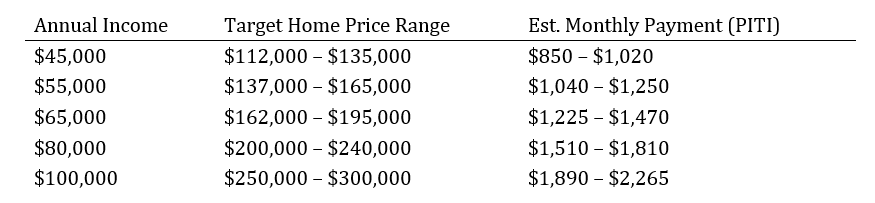
These estimates use the standard 2.5–3x income multiplier and assume a 5% down payment, property taxes at NC’s effective rate of 0.77%, and average homeowner’s insurance. PITI = Principal, Interest, Taxes, and Insurance.
The NC Housing Finance Agency guideline is to keep your total monthly housing cost at or below 32% of your gross monthly income, with total monthly debt not exceeding 45%. If you qualify for down payment assistance through NCHFA, your upfront cash requirement is significantly reduced — which can free up savings to handle closing costs or home repairs after purchase.
For the most accurate number, schedule a free buyer consultation with Latrice McFadden, a trusted Durham Raleigh real estate advisor who can model your specific income, debts, and credit profile and help you find the programs that maximize your buying power.
What are the specific steps for buying a house in North Carolina for the first time?
Here is the complete step-by-step process for first-time buyers in North Carolina:
1.Review your credit and finances — Pull your free credit report, dispute errors, and spend 60–90 days improving your score if needed. Calculate your DTI ratio and determine your realistic savings for a down payment.
2.Complete homebuyer education — Take a HUD-approved course (required for most NCHFA programs). Available online and typically takes 4–8 hours.
3.Get pre-approved — Work with an NCHFA-approved lender. Bring W-2s, two years of tax returns, recent pay stubs, and 60 days of bank statements.
4.Find a real estate agent — Choose a trusted triangle realtor with experience in first-time buyer programs. Their commission is paid by the seller — your representation is free.
5.Search for homes and make an offer — Your agent will guide the search and help you write a competitive offer. In NC, offers include a due diligence fee paid directly to the seller (non-refundable if you walk away).
6.Complete inspections during due diligence — Schedule a professional home inspection. Focus on safety, structural, and system issues. Negotiate repairs before the due diligence period ends.
7.Finalize your mortgage — Your lender orders an appraisal and completes underwriting. Avoid new credit, large deposits, or major purchases during this period.
8.Close with a real estate attorney — North Carolina requires a licensed attorney to handle closings. They manage title examination, funding, and document signing. You receive the keys at the end of closing.
One important NC-specific note: the due diligence fee is unique to North Carolina. It is paid directly to the seller, is not held in escrow, and is forfeited if you terminate the contract for any reason — including during the inspection period. Make sure you understand this before signing.
What are the current mortgage rates for first-time home buyers in North Carolina today?
As of early 2026, the average 30-year fixed mortgage rate in North Carolina is approximately 6.54% — about 3 basis points below the national average, according to Bankrate’s current NC mortgage rate data.
Here is how current NC rates break down by loan type:
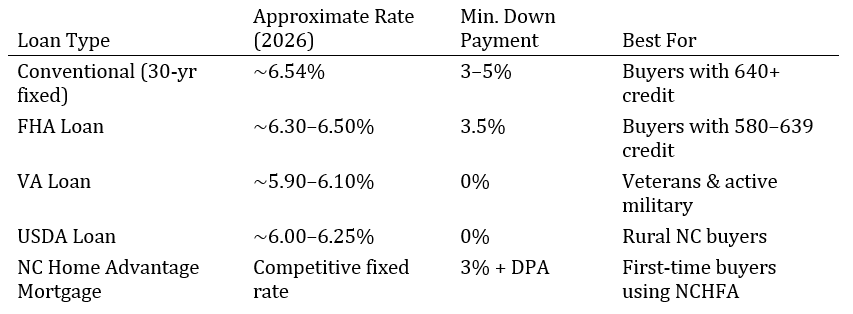
Rates change daily based on market conditions. The rate you personally receive will depend on your credit score, loan type, down payment amount, and the lender you choose. Buyers with credit scores above 720 typically receive rates 0.25–0.50% lower than the average.
The best way to get your actual rate is to get pre-approved by at least two or three lenders and compare Loan Estimates side by side. Even a 0.25% difference in rate can save you thousands of dollars over the life of a 30-year loan. If you need help identifying the right lenders for your situation, the experienced NC real estate agents at our team can point you in the right direction.
Ready to Buy Your First Home in North Carolina?
I’ve helped dozens of first-time buyers across Durham, Raleigh, and the greater Triangle navigate grants, mortgage programs, and closing day — and I’d love to do the same for you. Most of my clients didn’t think they were ready to buy — until we sat down and ran the numbers together. Whether you’re ready to start looking or just have a few questions, I’m here to help with honest, no-pressure guidance from someone who knows this market inside and out.
As Latrice McFadden, your trusted Durham NC realtor and Raleigh NC realtor, my job is to make sure you never leave money on the table and never feel lost in the process.
No pressure. No obligation. Just a real conversation about your goals.
Book My Free 30-Minute Consultation →
Conclusion
Buying your first home in North Carolina is more achievable than many people realize. With a market that’s tilting toward buyers, statewide grant programs offering up to $15,000 or more in down payment assistance, and a range of affordable cities from Rocky Mount to Durham to Greenville, the path to homeownership in North Carolina has rarely been more accessible. The key is preparation: know your credit score, understand your budget, get pre-approved early, and make sure you’re working with one of the top NC realtors who knows how to maximize the programs available to you. Take it one step at a time, and you’ll find that your first home in North Carolina isn’t just a dream — it’s a very achievable next chapter. When you’re ready to take that first step, Latrice McFadden is here to guide you home.
Word count: ~3,000 words | Focus keyword: north carolina first time home buyer | Author: Latrice McFadden, Durham Raleigh Real Estate Advisor | Category: North Carolina Real Estate Guide


