Real Estate NC: Discover the best real estate opportunities today
NORTH CAROLINA MARKET UPDATE
March 2026
Discover the Best Real Estate Opportunities in NC Today!
Unlock the door to your future with the best real estate opportunities in North Carolina! Explore vibrant markets and dream homes waiting just for you.

Overview of the North Carolina Real Estate Market
If you have been thinking about buying, selling, or investing in real estate NC, March 2026 is a great time to take action. The North Carolina housing market is moving toward balance. That means buyers now have more power than they did just a year or two ago, and sellers can still earn strong returns.
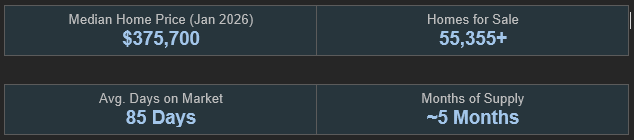
According to Redfin data, the median home price in North Carolina as of January 2026 was $375,700, up 1.4% compared to last year. There were over 55,000 homes for sale, which is 10.3% more than the same time last year. Homes are staying on the market for about 85 days, giving buyers more time to think and negotiate.

The market is no longer the wild seller's market it once was. It is transitioning into a healthier, more balanced environment where both buyers AND sellers can win.
Key Factors Driving Real Estate Growth in NC
North Carolina continues to attract people from all over the country. Here are the biggest reasons why the real estate NC market keeps growing:
•Population Growth: Brunswick County and surrounding Wilmington-area counties are among the fastest-growing counties in the state, some growing by 9–25% between 2020 and 2024.
•Strong Job Market: Cities like Raleigh, Charlotte, and Durham are home to major tech, finance, healthcare, and education employers.
•Affordable Cost of Living: Compared to states like New York, California, or Florida, North Carolina offers a lower overall cost of living.
•New Construction: Builders are adding new homes, especially in the Triangle (Raleigh-Durham) and Wilmington areas, helping fill inventory gaps.
•Stabilizing Mortgage Rates: Rates are expected to hover around 6% in 2026, making home loans more manageable for buyers.
•No State Wealth Tax: North Carolina's tax structure is friendly to investors and retirees alike.
Popular Cities for Real Estate Investment in North Carolina
Not all cities in North Carolina are the same. Here is a quick guide to the hottest real estate markets:
Raleigh — The Research Triangle Hub
Raleigh remains one of the most in-demand markets in the entire Southeast. With top universities, a booming tech scene, and a growing population, Raleigh active listings are expected to grow by over 20% year-over-year in 2026. This is great news for buyers looking for options.
Charlotte — The Financial Capital
Charlotte is North Carolina's largest city and a major financial hub. Steady job growth and in-migration continue to support home prices. New commercial development is fueling residential demand in surrounding suburbs like Huntersville, Matthews, and Concord.
Wilmington & The Coast
The Wilmington area and its coastal counties are among the fastest-growing in the state. If you love beach living, coastal properties offer both lifestyle and long-term investment value. Waterfront communities like Wrightsville Beach have median home prices around $2,009,000, showing the premium buyers will pay for ocean access.
Durham & The Triangle
Durham, home to Duke University and a thriving biotech scene, is an excellent pick for investors targeting the rental market. With thousands of students, researchers, and professionals needing housing, rental vacancy rates stay low.
Asheville
Asheville is a mountain gem popular with retirees and remote workers. Its unique culture, natural beauty, and growing tourism make it a steady real estate investment destination.
Types of Real Estate NC Opportunities Available
Whether you are a first-time buyer, an experienced investor, or somewhere in between, real estate NC offers something for everyone:
•Single-Family Homes: The most common purchase type, ranging from starter homes to luxury estates.
•Townhomes & Condos: Ideal for first-time buyers, young professionals, and downsizers looking for low maintenance.
•New Construction: Builders like Robuck Homes offer both move-in-ready options and customizable builds in communities across the Triangle and Wilmington.
•Multi-Family Properties: Duplexes and small apartment buildings are strong income-producing investments, especially near university towns.
•Vacation & Short-Term Rental Properties: Coastal and mountain markets offer strong Airbnb and VRBO rental income potential.
•Land & Lots: Raw land is available for development at various price points across the state.
•Commercial Real Estate: With a growing economy, office, retail, and industrial properties are attracting investors.
Understanding the Real Estate NC Laws
Before you buy or sell in NC, it helps to understand a few key laws and rules:
Disclosure Requirements
North Carolina sellers are required to fill out a Residential Property Disclosure Statement. This form tells buyers about known issues with the property, like roof leaks, foundation problems, or neighborhood nuisances. Honesty here protects both sides.
Due Diligence Period
NC uses a unique Due Diligence system. When you make an offer, you pay a Due Diligence Fee directly to the seller. During this period, you can inspect the home and back out for any reason — but you lose that fee. This protects sellers from frivolous offers.
Closing Costs
Closing costs in North Carolina typically include a loan application fee ($150–$500), title search, appraisal, and recording fees. Budget for roughly 2–5% of the purchase price in closing costs.
Attorney Requirement
North Carolina is an attorney closing state. That means a licensed real estate attorney must be present at closing to handle the legal paperwork. This adds a layer of protection for both buyers and sellers.
Landlord-Tenant Laws
If you plan to rent out property, familiarize yourself with NC's Residential Rental Agreements Act. It outlines rules for security deposits, lease agreements, and tenant rights.
Financing Options for Real Estate Buyers in NC
Getting the right loan is just as important as finding the right home. Here are your main financing choices in 2026:
Conventional Loans
Most buyers use conventional loans. In 2026, mortgage rates in NC are hovering around 6%, which is more manageable than the 7–8% highs of recent years. A 20% down payment avoids private mortgage insurance (PMI).
FHA Loans
First-time buyers with lower credit scores can use FHA loans with as little as 3.5% down. These are backed by the federal government and are great entry points into homeownership.
VA Loans
If you are a veteran or active military member, VA loans offer zero down payment and no PMI. North Carolina has a large military population near Fort Liberty (formerly Fort Bragg) and Camp Lejeune, making this option widely used.
USDA Loans
If you are buying in a rural or suburban area of NC, you may qualify for a USDA loan with no down payment required. Many parts of Eastern NC and the Piedmont qualify.
NC Home Advantage Mortgage Program
The North Carolina Housing Finance Agency offers down payment assistance programs for eligible first-time and move-up buyers. You could receive up to 3–5% of the loan amount as a forgivable loan.
Tips for First-Time Homebuyers in North Carolina
Buying your first home can feel overwhelming. Here are simple, practical steps to make it easier:
✅Get Pre-Approved First: Before you start touring homes, talk to a lender and get a pre-approval letter. This shows sellers you are serious and ready to move.
✅Know Your Budget: Your monthly mortgage should ideally stay below 28–30% of your gross monthly income. Do not forget to factor in property taxes, insurance, and HOA fees.
✅Research Neighborhoods: Look at school ratings, commute times, crime statistics, and future development plans. A good neighborhood adds value over time.
✅Do Not Skip the Inspection: Even in a competitive market, always get a home inspection. It can save you thousands in surprise repairs.
✅Understand the Due Diligence Fee: In NC, this non-refundable fee is paid upfront. Make sure you are serious about the home before submitting.
✅Use Down Payment Assistance: Check the NC Housing Finance Agency for programs that can help cover your down payment.
✅Be Patient but Ready: The market in 2026 is more balanced, but desirable homes in hot areas like Raleigh still move fast. When you find the right one, be ready to act.
How to Identify a Profitable Investment Property
Ready to invest? Here is what smart real estate investors look for in NC in 2026:
The 1% Rule
A good rental property should generate monthly rent equal to at least 1% of the purchase price. For example, a $250,000 home should rent for around $2,500 per month. This is harder to hit in pricier markets but more achievable in smaller NC cities.
Cash Flow Analysis
Calculate your monthly rental income minus mortgage, taxes, insurance, maintenance, and property management fees. Positive cash flow means profit every month.
Location, Location, Location
Properties near universities, hospitals, military bases, or major employers tend to have strong rental demand and low vacancy rates. Raleigh, Durham, Fayetteville, and Jacksonville are excellent for this.
Equity Potential
Look for neighborhoods that are early in their growth cycle. Areas on the outskirts of Charlotte and Raleigh that have new infrastructure or planned development often see the strongest appreciation.
Watch Foreclosure & Pre-Foreclosure Data
As of early 2026, there are 4,685 properties in pre-foreclosure in NC. These can sometimes be purchased below market value, though they require careful due diligence.
Short-Term Rental Potential
Asheville, the Outer Banks, and Lake Norman are excellent short-term rental markets. Check local regulations before purchasing, as some cities have restrictions on Airbnb-style rentals.
The Role of Real Estate Agents in NC
A skilled, local real estate agent can be your greatest asset in the NC market. Here is what they bring to the table:
•Market Knowledge: A local agent knows neighborhood trends, upcoming developments, and fair pricing — data you simply cannot find online.
•Negotiation Skills: In a market where 97.2% of homes sell near list price, having a sharp negotiator on your side matters.
•Access to Listings: Agents often know about homes before they hit the public market (pocket listings), giving you a competitive edge.
•Transaction Management: From offer to closing, your agent coordinates inspections, due diligence, financing, and the closing attorney.
•Buyer Representation is Free: In NC, buyer's agents are typically paid by the seller. As a buyer, you get expert guidance at no direct cost to you.
•For Sellers: A listing agent will price your home competitively, market it professionally, and attract qualified buyers — often resulting in faster sales and stronger offers.
Tip: When choosing an agent, look for one with local experience, strong reviews, and a clear marketing plan. Ask about their average days on market and list-to-sale price ratio.
Conclusion: Making the Right Real Estate Investment Decision in NC

The real estate NC market in March 2026 presents a rare window of opportunity. The frenzy of past years has calmed. Inventory is rising. Mortgage rates are stabilizing. And home prices are still growing — just at a healthier, more sustainable pace.
Whether you are a first-time buyer looking for an affordable starter home in Clayton, a growing family eyeing a new build in the Triangle, a retiree dreaming of a coastal condo in Wilmington, or an investor building a rental portfolio in Durham — North Carolina has something for you.
Here is your action plan:
•Buyers: Get pre-approved now, work with a local agent, and take advantage of the increased inventory before spring competition heats up.
•Sellers: Price your home accurately based on current comps. Homes that are priced right still sell quickly and close near full list price.
•Investors: Focus on high-rental-demand corridors near universities, military bases, and growing job centers. Run your numbers carefully.
North Carolina is not just a great place to live — it is a great place to invest.
The door to your future is open. Will you walk through it with me? Contact Latrice McFadden today if you are ready to Make Your Move.
Disclaimer: This blog is for informational purposes only and does not constitute legal, financial, or investment advice. Market data sourced from Redfin, Houzeo, NC Realtors, and other public sources as of early 2026. Always consult a licensed real estate professional before making any real estate decisions.


